
Emergency Tree Removal
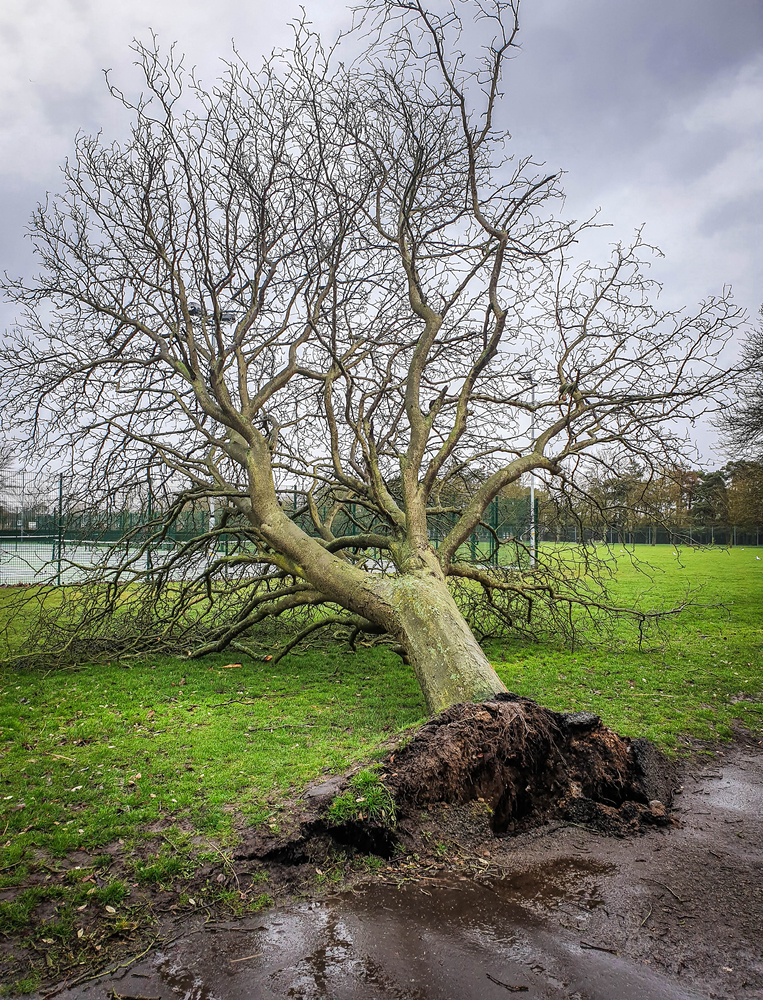
There are few sights as disheartening for a homeowner as waking up after a severe storm to find a beloved tree leaning precariously or lying on its side. Whether it was the howling winds of a hurricane, the heavy burden of an ice storm, or simply the ground becoming so saturated by torrential rain that the soil could no longer hold the roots, the result is the same: a landscape feature you have nurtured for years is now in poor condition.
Most homeowners naturally assume that once a tree has been uprooted, its life is over, and the only path forward is to schedule a tree removal. However, before you assume the worst, know that there may be another viable option. Depending on the severity of the damage, the specific characteristics of the tree (such as its size), and the tree’s proximity to structures, the uprooted plant could potentially be righted and saved.
Below, we explain the critical factors involved in determining whether or not an uprooted tree can be replanted and thrive once again.
Factors That Affect Whether an Uprooted Tree Can Be Replanted
Replanting a fallen tree is not as simple as pulling it upright and stomping down the dirt. In fact, replanting requires specific conditions to be in place in order for the tree to remain healthy.
When you reach out to an arborist after a tree has become uprooted, they will look at a matrix of factors to predict the survivability of the replanted tree. These factors include:
The Size and Age of the Tree
Generally speaking, the smaller and younger the tree, the higher the odds of survival. Saplings or young trees with a trunk diameter of less than 3 to 4 inches are often excellent candidates for replanting because a smaller percentage of roots were likely severed during the fall. They are also lighter, making the physical act of righting them less traumatic for the remaining roots.
Conversely, large, mature trees are often incredibly difficult to save. When a massive oak or maple falls, the sheer weight of the canopy tears a significant portion of the major structural roots. Even if you could stand a 60-foot tree back up, the remaining root system is rarely sufficient to anchor it against future winds or to uptake enough water to support the massive canopy.
The Extent of Root Damage
When determining if an uprooted tree can be replanted, arborists often look at how much of the root system is still intact. If more than one-third to one-half of the major roots have been severed or torn, the tree will likely suffer severe transplant shock and die, even if uprighted. In these cases, you will need to consider tree removal over replanting.
Of course, a fallen tree’s survival does not simply depend on the condition of its anchor roots. Arborists must also assess the microscopic feeder roots, which absorb water and nutrients. If the root ball has been ripped apart significantly, the tree will not be able to hydrate itself. Again, in this situation, removal would be the better option.
The Condition of the Soil
Why did the tree fall in the first place? If the tree fell because it was planted in shallow, rocky soil where its roots couldn’t penetrate deep enough, standing it back up in that same soil usually results in the same outcome during the next storm. However, if the soil failure was due to a freak localized flood or oversaturation in an area that usually drains well, replanting might be more viable once the soil moisture levels return to normal.
The Level of Damage to the Tree’s Structure
When a tree falls, the trunk may twist, split, or crack. Additionally, large branches may break, and bark may peel away. While minor damage can be pruned and treated, severe structural damage may compromise the tree’s long-term safety, even if it technically survives replanting. Therefore, trees with significant trunk cracks, major limb fractures, or bark loss may be rejected for replanting.
The Resilience of the Specific Species
Some species, like certain willows or dogwoods, are tenacious and can recover from significant root disturbance. Others, such as sensitive conifers or brittle hardwoods, have a very low tolerance for root trauma and may not be viable for replanting. An ISA-certified arborist will know the specific tolerance levels of the species in your yard and can help determine if replanting is worthwhile.
The Tree’s Proximity to Structures and Utilities
An often-overlooked factor in replanting decisions is how close the uprooted tree is to homes, garages, fences, driveways, or underground utilities. Even if a tree can be replanted from a biological standpoint, it may not be advisable from a safety or liability perspective.
A tree that fell toward a structure may have already demonstrated an unstable root system, and replanting it in the same location could pose a future risk if high winds or saturated soil conditions return.
How Long Are Uprooted Trees Viable?
Time is the enemy of an uprooted tree, and from the moment the roots are pulled out of the earth and exposed to the air, the clock starts ticking.
Generally, a tree has the best chance of survival if it is replanted within 24 hours of falling. If the roots are left exposed to the sun and dry air for several days, the fine root hairs die off. Once these die, the tree cannot uptake water, even if it is put back in the ground.
When Should Uprooted Trees Be Removed?
While saving a beloved tree is always worth exploring, there are situations where removal and replanting is simply the safest and most responsible solution. With that in mind, tree removal may be recommended if:
- There Is Severe Trunk Damage: If there are vertical cracks running up the trunk, or if the wood has splintered, the structural integrity of the tree is gone, and the tree must be removed.
- The Tree Is Too Large to Anchor Safely: Physics is a harsh reality in arboriculture. If a large, mature tree is stood back up without intact anchor roots, it will be at the mercy of every storm that blows through. And discerning professionals, like those at Heartwood Tree Care, would not recommend replanting these large trees, as they would pose a serious risk to nearby homes, cars, and structures.
- The Tree Is Diseased or Rotted: Sometimes, a storm is just the final straw for a sick tree. If the roots that ripped out of the ground appear mushy, black, or smell of decay, or if the trunk shows signs of hollows and fungus, the tree was likely failing before the wind blew. Replanting a diseased tree is a waste of resources, and it is better to remove it and plant a healthy sapling in its place.
- The Tree Is Too Close to a Potential Target: If the tree is leaning or uprooted near a “target” (an arborist term for a house, a driveway, a playground, or a power line), the tolerance for risk drops to zero. In these cases, removal is the only viable option.
The Best Way to Know: Consult an ISA-Certified Arborist
Making the call between replanting and removal is not something you should do based on a guess. After all, replanting a tree incorrectly can lead to future liability, property damage, or the slow, ugly decline of the tree over several years.
The best way to know whether you can save your uprooted tree is to have it inspected as soon as possible by an ISA-certified arborist. Our professionals at Heartwood Tree Care in Charlotte and Lake Norman, NC, can assess the percentage of root loss, the health of the wood, and the safety of the surrounding area to give you an honest probability of survival.
If the tree can be saved, we can handle the entire replanting process, from lifting and stabilizing the tree to supporting its recovery with proper pruning and plant health care. And if the tree is beyond saving, we can provide safe and efficient removal services to protect your property and help you plan for new plantings in the future.
Has your tree recently fallen or appears to be unstable? Contact our team today, and let us help you determine the next steps.