
Emergency Tree Removal
Trees add enormous value to our homes and communities. They provide shade, enhance curb appeal, support local wildlife, and contribute to the overall health of the environment. But despite all the benefits they offer, trees can become compromised over time. Severe storms, accidental impacts, construction damage, pest infestations, fungal diseases, and even nutrient deficiencies can weaken a tree’s natural structure. When that happens, what was once an asset can quickly become a hazard.
The best way to avoid the dangers of tree failure is to recognize the early warning signs that a tree is structurally unsound. Let’s look at these red flags now.
How to Know a Tree Is Structurally Unsound
Visible Cracks, Splits, or Fractures in the Trunk
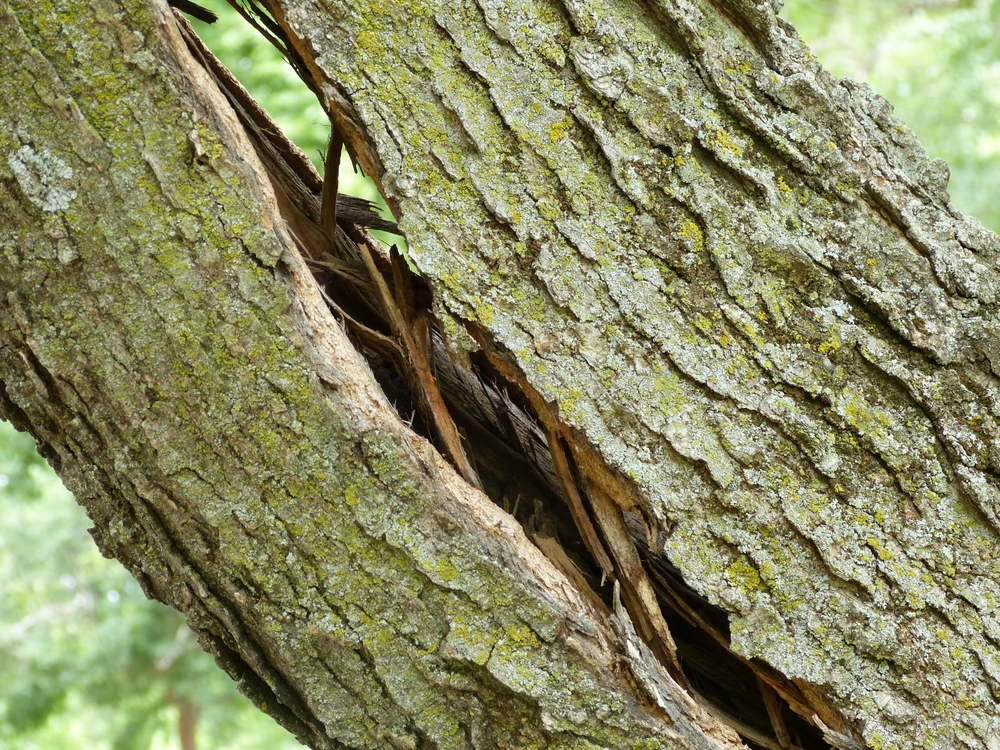
A tree’s trunk acts as the backbone of its entire structure. When that backbone is compromised, the risk of sudden failure increases dramatically. The most common types of damage to tree trunks include cracks, splits, and fractures.
Cracks and splits are often caused by storm damage, sudden temperature drops, or years of internal decay. These cracks may be vertical, horizontal, or angled, and while some may appear superficial, others run deep into the middle of the trunk.
Even small fractures should be taken seriously because they often worsen over time. For example, in addition to growing, it can allow moisture, pests, and pathogens inside the tree, speeding up decay and increasing the likelihood of failure.
Leaning That Wasn’t Always There
Many trees naturally grow at a slight angle, especially when competing for sunlight. But a sudden or progressive lean is a different story.
A tree that begins leaning after a storm, heavy rainfall, or excavation work may be experiencing root failure. This type of lean usually comes with other warning signs, such as cracked soil at the base of the tree, exposed roots, or a bulging area on one side of the trunk. If the lean worsens quickly or the tree is tilting more than 15 degrees, it is considered extremely high-risk and should be removed promptly by a certified arborist.
Dead or Hanging Branches (Also Known as “Widow-Makers”)
Branches die for many reasons: pest damage, fungal infections, storm injuries, and lack of sunlight, just to name a few. While dead branches may seem harmless, they are often the first indication that a tree is declining.
Deadwood becomes brittle and unpredictable. Even in calm weather, hanging limbs — commonly referred to as widow-makers in the arborist world — can break free and fall. This poses obvious safety risks, especially near busy walkways, driveways, and play areas.
If you notice multiple large dead limbs, particularly high in the canopy, it is worth scheduling a tree health inspection. The cause could be isolated to the branch, or it may reflect a much larger internal issue affecting the whole tree.
Excessive Canopy Dieback
A thinning canopy is often one of the earliest indicators of stress within a tree. Dieback refers to the gradual death of branches starting at the tips and progressing inward toward the trunk. This problem can develop as a result of:
- Nutrient deficiencies
- Compacted root zones
- Pest infestations
- Disease
- Old age
- Environmental changes
If a tree cannot transport water and nutrients effectively — whether from root damage, internal decay, or trunk injury — the canopy will begin to decline. Widespread dieback typically means the tree is struggling at a systemic level, not just in isolated branches.
Extensive Decay or Fungal Growth
Fungus often acts as nature’s way of breaking down old or compromised wood, but that also means it’s a sign the tree is structurally unsound.
Mushrooms, conks, bracket fungi, or unusual growths along the trunk or around the base typically indicate internal decay. And internal decay means the tree is no longer strong enough to support the weight of the canopy. Failure is often imminent in these situations.
Since decay spreads slowly and often without any outward signs, it is important to invest in regular inspections. A certified arborist can help you avoid the point where fungi become visible and the internal damage is too extensive.
Roots That Are Damaged, Exposed, or Decaying
The most dangerous structural defects are often the ones you cannot see clearly because they happen underground or right at the soil line. Trees have an array of roots that do more than just absorb water and nutrients. Specifically, they anchor the tree in place. If these roots are damaged or severed, the entire tree becomes structurally unsound.
How do you know if your tree’s root system is compromised if it’s largely underground? Look for these signs of root damage:
- Soil heaving (lifting) around the base of the tree
- Exposed or cracked roots
- Declining foliage throughout the canopy
- Mushrooms or fungal mats on the soil near the trunk
Ideally, trees should be evaluated by a professional before any construction or landscaping begins so protective measures can be put in place to prevent root damage. However, if the work is already complete and a tree was not inspected beforehand, it’s still important to have it assessed as soon as possible. Construction activity can disrupt or sever critical roots, compromising the tree’s stability.
Additionally, if root rot may have developed as a result of soil disturbance or drainage changes, addressing the issue promptly is essential, as even mild winds could cause a weakened tree to topple over.
Multiple Trunks or Weak Branch Unions
Trees with co-dominant stems (two or more trunks growing from the same point) may be visually appealing, but they often pose structural risks. Unless properly supported, these trunks can split apart, especially under heavy wind or the weight of ice and snow.
You may also notice included bark, a V-shaped wedge of bark trapped between two trunks or branches. This prevents a proper connection between the stems, creating a fault line where the tree could split. While cabling and bracing can sometimes help, trees with severely weak unions may require removal.
Evidence of Pests or Boring Insects
Certain insect species — such as emerald ash borers and ambrosia beetles — target weakened or stressed trees, and their presence could indicate that the tree is already compromised. You will know if your tree has been affected by a pest infestation if you see small holes in the trunk, sawdust-like material (frass) on the ground, woodpecker activity, and bark that peels away easily.
In many cases, you can address these infestations with properly timed trunk injections or tree sprays. In others, however, full removal of the tree may be necessary to protect your property and family from a structurally unsound tree.
Why Tree Removal Should Be Left to Certified Arborists
Once a tree becomes structurally unsound, removing it is not a project you should handle on your own. Hazardous trees are unpredictable, and even a single miscalculation can lead to property damage or a life-changing injury or death.
Our certified arborists have the training, equipment, and experience to:
- Evaluate the safest method of removal.
- Secure unstable trunks and limbs.
- Avoid damage to surrounding structures and landscapes.
- Follow industry standards and safety protocols.
In this way, whether we are dealing with a towering oak or a smaller ornamental tree, we can complete the removal without harm to nearby structures or people.
Call for Help Managing a Structurally Unsound Tree in the Charlotte or Asheville Areas
Trees endure storms, droughts, pests, soil compaction, construction stress, and countless other environmental pressures. Over time, even the strongest tree can reach a point where it is no longer structurally sound. When that happens, tree removal may be the safest option, and our ISA-certified arborists at Heartwood Tree Care can handle it with the utmost care.
Of course, if we can catch issues early enough, we may be able to provide preservation services, such as corrective tree pruning or cabling and bracing, to restore long-term health. We’ll perform an inspection and then recommend the best step forward for your property.
Contact us today to schedule an inspection and gain peace of mind about your tree’s structural stability.