Don't Miss Out! Get Tree Care Services through 3/31.

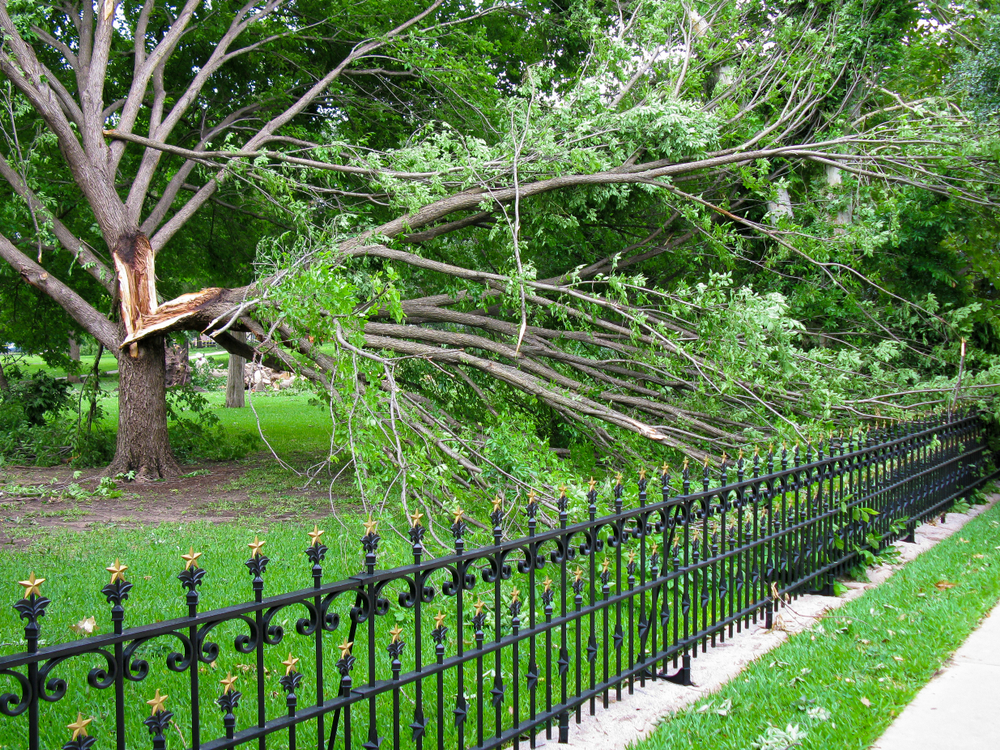
Storms can leave behind damage that isn’t always obvious at first glance. Once the wind dies down and the rain stops, your yard may look mostly intact, until you glance up and notice something unsettling. A large branch is dangling high above the ground, cracked and barely attached. These suspended limbs, often referred to as “widowmakers,” can break free and fall without warning.
That’s why having an ISA-certified arborist remove these limbs quickly is so important. Prompt attention can help protect people, pets, vehicles, and your home from sudden and potentially devastating damage and life-altering accidents. Not to mention, it can safeguard you from legal issues related to damage or injury.
What Counts as a Hanging or Hazardous Limb?
A hanging or hazardous tree limb typically refers to a branch that has been cracked, split, or torn during a storm and is no longer securely attached to the tree. These limbs may be partially supported by other branches or wedged into the canopy, creating a false sense of stability.
Some common examples of hazardous limbs include:
- Branches that are split and hanging downward at an angle
- Limbs suspended in the tree’s canopy after snapping
- Large branches leaning against structures
- Heavy limbs resting on smaller, weaker branches
- Branches with visible cracks along the trunk connection
- Dead branches
Even branches that remain attached can be hazardous if their structural integrity has been compromised. Of course, you can’t always know if a tree limb is in a precarious situation until it is inspected by an ISA-certified arborist.
Why Hanging Limbs Are More Dangerous Than They Look
At first glance, a hanging branch may seem like it will stay put. After all, it survived the worst of the storm. But the reality is that storm-damaged limbs are often under extreme stress. Wood fibers may be torn, connections weakened, and the weight distribution of the tree dramatically altered. Because of this, a damaged limb could fall at any moment — hours after the storm has passed, days later during calm weather, or even weeks down the road due to some unknown trigger.
Larger limbs are particularly dangerous because of their weight. When they fall from significant heights, they can cause serious injury or substantial property damage.
The term “widowmaker” isn’t used lightly. It reflects the very real danger these limbs pose. What may look like a minor issue can quickly turn into an emergency if ignored.
How Hanging Limbs Can Lead to Further Tree Damage
Beyond acting as a safety risk, hanging limbs can also compromise the long-term health of the tree itself.
When a branch splits or tears, it often leaves behind a jagged wound. These wounds create entry points for pests, fungi, and disease. If not properly pruned and treated, decay can spread into the trunk or major structural limbs, weakening the entire tree over time.
Additionally, the extra weight of a suspended limb can place ongoing strain on the tree. The damaged branch may continue to tear downward, enlarging the wound and causing further splitting. Nearby branches may also break under the additional stress.
In some cases, the structural imbalance created by storm damage can make the tree more susceptible to future storms. For example, a canopy that is no longer evenly distributed can catch wind differently, increasing the likelihood of additional limb failure.
By addressing hanging limbs promptly, homeowners can help prevent secondary damage and preserve the health and stability of their trees.
Why DIY Tree Limb Removal Is Extremely Risky
While you may think that removing the hanging tree limb is a natural next step after a storm, please note that attempting to remove a damaged branch without proper training and equipment is extremely dangerous.
Hanging limbs are often under tension and compression. When cut incorrectly, they can snap back violently, swing unpredictably, or drop suddenly and without warning.
Climbing a storm-damaged tree adds another layer of risk. The tree may be structurally compromised, making it unstable to climb. Using ladders on uneven ground or operating chainsaws overhead increases the chance of serious injury.
Instead of attempting tree limb removal yourself, hire a certified arborist. An arborist is trained to assess the physics of damaged limbs and knows how to relieve tension safely, use rigging systems to control falling branches, and remove hazardous limbs without causing further harm to the tree or themselves.
Other Benefits of Working With a Certified Arborist
An ISA-certified arborist can do more than simply remove a single hanging branch after a storm. They can provide a comprehensive evaluation of the tree’s condition and overall health and recommend tips for saving a storm-damaged tree. Their solutions may include:
- Structural supports for compromised branch unions
- Tree pruning for severely damaged branches
- Soil care to support the tree’s regrowth
- Insect and disease treatment to help wounds heal properly
- Tree removal if the tree is beyond saving
When performing pruning services, the certified arborist will make clean cuts that help the tree compartmentalize wounds and reduce the risk of decay. They will also make sure the canopy remains balanced to support healthy regrowth.
In addition, they will have the equipment and team needed to handle large limbs safely. From ropes and harnesses to bucket trucks and wood chippers, they can remove debris efficiently while minimizing disruption to your property.
Reclaim Your Peace of Mind After a Storm
After a storm, homeowners already have enough on their plate, with clearing debris, coordinating repairs, and trying to get life back to normal. The last thing you should have to worry about is whether a cracked branch overhead might fall at any moment.
Thankfully, the experienced team at Heartwood Tree Care can safely remove hanging limbs, evaluate your trees for hidden damage, and help restore your property. Reach out today to request an estimate or schedule a professional storm damage assessment in Charlotte, Lake Norman, or Asheville, NC. We’ll help you move forward with confidence.