Don't Miss Out! Get Tree Care Services through 3/31.

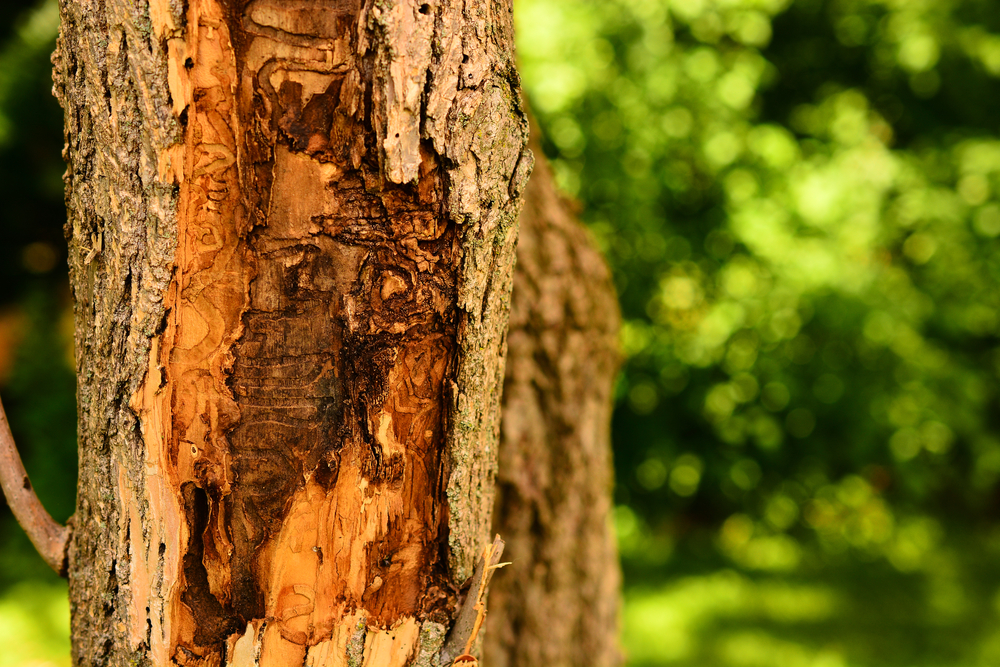
You walk outside one morning and notice something a little unusual about your favorite tree. Maybe the leaves look thinner than they did last year. Perhaps you spot tiny holes in the bark that weren’t there before. Or maybe a few branches appear to be dying back for no obvious reason. These problems just may be the first signs of an insect infestation.
While the damage from a tree insect infestation may be cosmetic at first, when left unaddressed, the pests can weaken a tree’s structure, reduce its lifespan, and even create hazardous conditions on your property. By paying attention to early warning signs, you can take action before the damage becomes extensive and costly.
If you live in North Carolina, it’s important to know which insects pose a threat and what symptoms to watch for.
Common Tree Insects That Cause Damage in North Carolina
North Carolina’s climate supports a wide variety of tree species, and unfortunately, that also means it supports a wide range of tree-damaging insects. Some pests target specific species, while others are more opportunistic and attack stressed or weakened trees. The best defense is to proactively treat your trees to keep them healthy enough to respond to threats.
Here are a few of the most common culprits North Carolina homeowners should be aware of:
Southern Pine Beetle
The southern pine beetle is one of the most destructive forest pests in the southeastern United States. It primarily targets pine trees and can spread rapidly from tree to tree. These beetles tunnel beneath the bark, disrupting the tree’s ability to transport water and nutrients.
Emerald Ash Borer
Though originally more prevalent in other regions, the emerald ash borer has made its way into parts of North Carolina and poses a serious threat to ash trees. The larvae feed beneath the bark, damaging the tree’s vascular system.
Aphids and Scale Insects
Aphids, armored scales, and soft scales feed on tree sap and are commonly found on ornamental trees and shrubs. While they may not always kill a mature tree outright, heavy infestations can weaken it significantly.
Bagworms
Bagworms are commonly seen on evergreens but can also affect deciduous trees. The larvae create small, spindle-shaped “bags” made of plant material that hang from branches. Left untreated, bagworms can defoliate trees, leading to severe stress, dieback, or death.
Early Warning Signs of a Tree Insect Infestation
Recognizing the early signs of insect activity is key to preventing long-term damage. While different pests produce different symptoms, many infestations share common warning signs, including:
Thinning or Discolored Foliage
One of the earliest indicators of an insect infestation is a change in the tree’s canopy. Leaves may appear sparse, smaller than usual, or discolored. In evergreen trees, needles may fade from green to yellow or brown.
While drought and nutrient deficiencies can also cause similar symptoms, insect infestations often create uneven thinning or discoloration concentrated in specific sections of the tree.
Holes in the Bark
Small holes in the bark can signal the presence of boring insects. These holes may be round, oval, or D-shaped, depending on the species.
Even if the holes seem minor, they may indicate larvae feeding beneath the bark, where significant internal damage can occur long before external symptoms become severe.
Sawdust or Frass at the Base of the Tree
If you notice fine, sawdust-like material around the base of your tree or caught in bark crevices, this is often frass — waste produced by wood-boring insects.
Frass can be one of the clearest signs of active infestation, especially when paired with visible holes or bark splitting.
Peeling, Cracking, or Loose Bark
When insects tunnel beneath the bark, they disrupt the tree’s internal structure. Over time, bark may begin to crack, peel away, or feel loose to the touch. In some cases, removing a small section of loose bark may reveal winding galleries or tunnels underneath.
Increased Woodpecker Activity
Woodpeckers are natural predators of many tree-boring insects. If you notice an unusual amount of pecking on a particular tree, it could be a sign that insects are present beneath the surface.
While woodpeckers themselves can cause cosmetic damage, their activity often points to a deeper issue — sapsuckers.
Branch Dieback
When portions of a tree’s vascular system are damaged by insects, water and nutrients can no longer reach certain limbs. This often results in branch dieback, where sections of the canopy fail to leaf out or gradually decline.
Dieback that starts at the top of the tree or appears in isolated sections should never be ignored, as these are the most active and important parts of the tree’s crown. When dieback occurs here, recovery becomes more problematic.
Sticky Residue or Sooty Mold
Sap-feeding insects like aphids and scale leave behind honeydew, which can coat leaves and surfaces below. This sticky substance attracts ants and encourages the growth of black sooty mold. While sooty mold itself does not infect the tree, it can block sunlight and reduce photosynthesis when heavy.
Why Early Detection Matters With Insect Infestations
Tree insect infestations rarely resolve on their own. In fact, once pests establish themselves, they can reproduce quickly and spread to neighboring trees. To stay ahead of an infestation, you need to detect the signs as early as possible.
Why is early detection so beneficial? An accurate diagnosis of a tree insect infestation offers several key benefits:
- More Treatment Options: Targeted treatments are often more effective in early stages.
- Reduced Stress on the Tree: Prompt intervention limits internal damage.
- Lower Overall Costs: Treating an infestation is generally far less expensive than removing a mature tree.
- Improved Safety: Preventing structural weakening reduces the risk of falling limbs.
It’s especially important to note that the longer an infestation goes unnoticed, the more difficult it can be to save the tree.
How a Professional Tree Health Inspection Can Help
While homeowners can spot visible warning signs of an insect infestation or other problem, determining the exact cause of tree decline requires professional expertise. This is because many symptoms (like thinning leaves or bark damage) can overlap between insect infestations, disease, environmental stress, or root problems.
An ISA-certified arborist can provide:
An Accurate Pest Identification
Different insects require different treatment strategies. A certified arborist can identify the specific pest species involved and determine whether the infestation is active or residual.
An Assessment of Overall Tree Health and Structural Integrity
Beyond identifying insects, arborists evaluate the overall health of the tree. They assess canopy density, root condition, trunk stability, and any safety risks associated with weakened limbs. This comprehensive evaluation allows the arborist to offer recommendations that address both pest control and long-term tree vitality.
Customized Treatment Recommendations
Treatment plans may include:
- Targeted insecticide applications
- Soil treatments to improve tree vigor
- Pruning of affected limbs
- Monitoring programs to track pest activity
Rather than applying a one-size-fits-all solution, a tailored approach considers the tree species, pest type, and severity of damage.
Prevention Strategies
In some cases, arborists can recommend proactive treatments for high-risk trees, especially during peak insect activity seasons in North Carolina. Preventative care can make a significant difference in preserving mature trees on your property because healthy trees are often able to fend for themselves.
Get Your North Carolina Trees Checked for an Insect Infestation
If you’re concerned about thinning leaves, bark damage, or unusual dieback, scheduling a professional tree health inspection can help protect your property. At Heartwood Tree Care, our ISA-certified arborists can determine whether pests are present, assess the condition of your tree, and recommend the right next steps based on the species, the pest involved, and the severity of the damage.
Contact our team today to give your trees in Charlotte, Lake Norman, and Asheville, NC, the attention they crave so that they can grow happily for years to come.