
Emergency Tree Removal
For homeowners and property managers who take pride in their landscape, trees are more than just background features; they’re living, growing investments. So, when something about their appearance suddenly looks off, it can be surprisingly alarming. Have you recently noticed that your tree’s bark looks a little different? Perhaps a patch of vibrant green has turned a ghostly white, or a deep brown trunk is suddenly weeping a dark, rusty fluid.
While some bark color changes are completely normal and part of a tree’s natural growth cycle, others can signal underlying issues that shouldn’t be ignored. If you’ve ever looked at your tree and thought something didn’t seem quite right, it’s worth paying attention to that instinct. Often, that subtle feeling is your first clue that it’s time to have a certified arborist conduct a tree health inspection.
Today, we’ll take a closer look at why tree bark changes color and when this change calls for the assistance of a certified arborist.
Why Bark Changes Color Naturally
Not every change in bark color is a cause for concern. In fact, trees naturally evolve in appearance over time, and bark is no exception.
Seasonal Shifts
Just like leaves change color in the fall, bark can also appear different depending on the season. Specifically, variations in temperature, moisture, and sunlight can all impact how bark looks throughout the year.
During colder months, bark may appear darker due to increased moisture retention or frost. In contrast, prolonged sun exposure in the summer can cause bark to lighten, fade, or even develop a slightly bleached appearance. These seasonal changes are typically gradual and consistent across the tree, making them easy to identify as natural.
Natural Growth Patterns
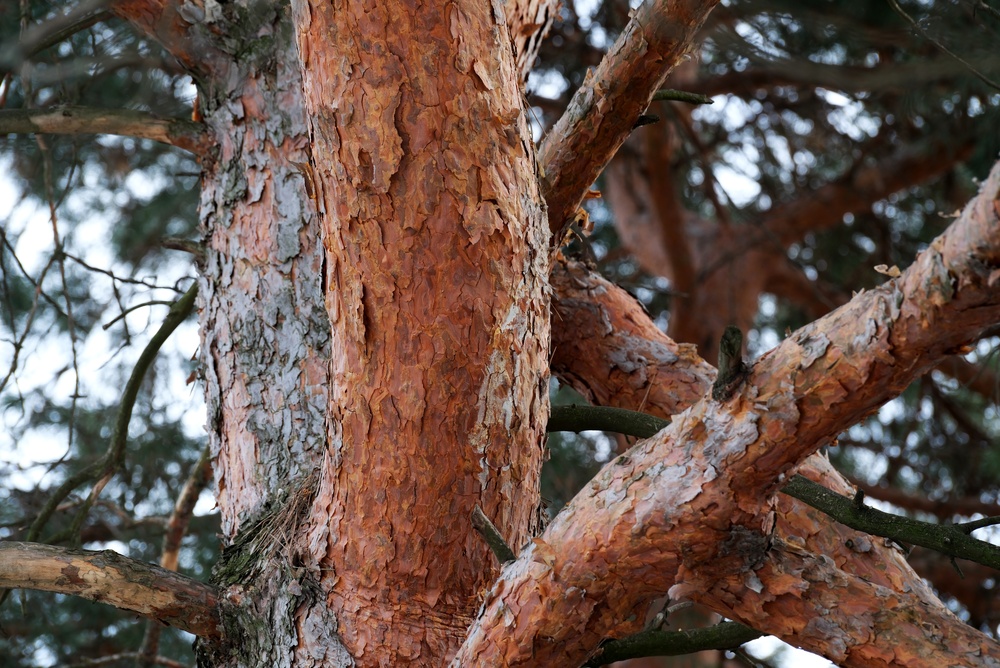
As trees grow and mature, their bark evolves. Young trees often have smoother, lighter-colored bark, while older trees develop thicker, rougher bark that may darken or take on deeper tones over time. In fact, some trees, like the silver maple and certain oaks, develop deep furrows when growing in diameter. When these furrows expand, they often reveal the inner bark, which is frequently a different color (often lighter or more orange) than the weathered outer layers.
Additionally, some species naturally shed or peel their bark as part of their growth process. Trees like sycamores or birches are known for their distinctive peeling bark, which can reveal different colors underneath, ranging from creamy whites to reddish-browns. This is completely normal and often adds to the tree’s visual appeal.
Environmental Factors
Your tree’s surroundings can also influence bark color. Soil quality, water availability, and exposure to pollutants all play a role.
- Sun Exposure: Trees receiving uneven sunlight may show color variation on different sides of the trunk.
- Water Levels: Too much or too little water can affect bark health and appearance.
- Urban Stressors: Pollution, construction activity, and compacted soil can all impact a tree’s vitality, sometimes leading to subtle changes in bark color.
When these changes happen gradually and don’t involve other symptoms (like cracking or peeling), they’re often just part of the tree adapting to its environment.
More Serious Causes of Bark Discoloration
While some bark changes are harmless, others can indicate deeper problems that require prompt attention.
Tree Diseases
Fungal, bacterial, and viral infections can all affect a tree’s bark. These diseases often disrupt the tree’s internal systems, leading to visible changes on the surface.
For example:
- Canker diseases can cause dark, sunken areas on the bark.
- Fungal infections may lead to unusual discoloration, including blackened or gray patches.
- Bacterial infections can result in oozing, staining, or wet-looking bark.
In many cases, these conditions worsen over time if left untreated, potentially compromising the tree’s structural integrity.
Pest Infestations
Insects are another common cause of bark discoloration. Certain pests burrow into or feed on the bark, damaging the tree’s protective outer layer.
Common culprits include:
- Emerald Ash Borers & Other Wood-Boring Insects: These insects tunnel beneath the bark, disrupting nutrient flow and causing discoloration or dieback.
- Armored and Soft Scale Insects: They attach to the bark and feed on sap, often leaving behind sticky residue or dark mold growth.
- Beetles: Some species introduce harmful fungi as they infest the tree, compounding the damage.
Signs of pest activity often include small holes, sawdust-like material (frass), or patches of discolored bark.
Decay and Rot
When a tree begins to decay, its bark may change color as internal tissues break down. This is often accompanied by other warning signs, such as soft or spongy wood, cracking, or sections of bark that fall away easily.
Decay can be caused by:
- Poor drainage or excess moisture
- Physical damage to the trunk
- Untreated disease or pest infestations
Left unchecked, decay can weaken the tree’s structure, increasing the risk of limb failure or even complete collapse.
What Homeowners Should Do if They Notice Sudden Changes
If you notice a sudden or unusual change in your tree’s bark color, the most important thing you can do is contact a local arborist. While it’s tempting to wait and see if the issue resolves on its own, early intervention is often the key to saving a tree.
Also, avoid attempting DIY treatments. Applying the wrong solution can sometimes make the problem worse. Instead, document what you’re seeing (photos can be especially helpful) and report it to a professional arborist for guidance.
Protect Your Trees Through Early Detection & Expert Care
Trees are resilient, but they’re not invincible. Changes in bark color can be one of the earliest indicators that something is affecting your tree’s health, whether it’s a natural shift or a more serious concern. The sooner you identify the cause, the better your chances of preserving the tree and preventing further damage.
The good news is that the ISA-certified arborists at Heartwood Tree Care specialize in the “language” of trees. We know how to assess bark changes, diagnose underlying issues, and recommend targeted solutions that support long-term tree health. Whether the issue is environmental stress, disease, or pest activity, we take a thoughtful, science-based approach to every situation for the best results.
If you’ve noticed changes in your tree’s bark and aren’t sure what they mean, contact Heartwood Tree Care today. We’ll help you get to the bottom of the change and recommend the necessary tree or plant health care services.